Aurora Arboralis
Light From Within, or maybe just Barking Up The Wrong Tree
Hosing things down
 I just saw a very distressing incident.
A group of young people next door were sitting in the sun and chatting. The resident canine is a cute little grey fluffy thing – I almost never hear him, he’s not a barker and certainly not a yelper (wish he could give some lessons to the resident canine on the other side of my place). One of the guests had brought her new companion, a chunky-looking rottie.
Suddenly, all hell broke loose. The rottie had the fluffy one by the snout, and the yelping was loud and truly piteous. Two people were trying to restrain the rottie, two were trying to extract the poor fluffy; there was shouting and stumbling over garden furniture as they desperately tried to separate the dogs.
One young woman ran and got the hose, and started spraying water over the dogs. She seemed calm, deliberate – she alone wasn’t making any noise. As she hosed the rottie directly in the face, it finally broke its grasp.
The fluffy’s human gathered him up in his arms and ran inside, followed by one of the others. He was yelling “That dog has to go! That fucking dog has to go!” And repeated that very loudly from indoors several times.
The rottie’s human and another friend were trying to hold onto the rottie, and she asked the hose-wielder for the dog’s collar and leash. She brought the collar and leash over, and in response to her unheard question, the rottie’s human said, “he’s a rescue dog”.
She finally got the collar and leash onto the dog, and said, “I’m going to take him home now, but I’ll come back. Can you just find out for me how the other dog is? I’m going now, but I just want to know how the dog is.”
Anguished/angry masculine tones from inside the house were still insisting, “That fucking dog has to go!” The hose person went inside, and there were muted voices. And then the rottie and his human left.
I was so impressed with these young people.
Fluffy’s human was in such great distress, but he didn’t abuse or blame; he had to give voice to his anguish but all he said was for the other dog to go.
The rottie’s human was clearly mortified, but not defensive. That’s the thing with rescue dogs, you’re never sure what you’re getting, what they’ll do in a new situation. Once she got him on the leash and calmed down, her concern was for fluffy and his human. She stressed she was leaving, but wanted to know abut the other dog before she went.
But my greatest admiration is for the hose wielder.
Calm, practical, rendering effective assistance, with quiet sympathy. Separated the dogs; helped the rottie’s human get him under control; gently brokered their departure, buffering the anger and anguish of one, and the regret and anguish of the other.
I hope in all the violent, dreadful things that happen, I can be that hose wielder.
When ‘Good’ People Do ‘Bad’ Things
I’ve just read I Confess: Revelations in Exile, by Kooshar Karimi (2012, Wild Dingo Press).
The blurb: “Thi
 s is a memoir by Sydney-based doctor and writer/translator, who in 2000 managed to flee, with his family, certain torture and death which stalked him on a daily basis in his native Iran. Karimi’s sin was his Jewishness and the fact that he helped desperate girls and women who had been raped, terminate the resulting pregnancies. Whilst many stories have come out of Iran in the last decade or so, nothing matches the grittiness of this portrayal of life in the crumbling alleyways and damp cellars of an Iranian slum district — the extreme poverty and desperation, the regular betrayals and compromises even within families, in the fight for survival. The memoir begins at his birth on the back seat of a police car in the sub-zero temperatures of a bleak and icy winter’s night. It finishes with a nail-biting telling of his eventual escape across the border into Turkey, only to be pursued by his nightmares, for which he seeks a measure of atonement in the writing of this book.”
Above all I admire this man’s moral courage in telling it like it is. He doesn’t rationalise or excuse his actions in betraying other Jewish people to the authorities, despite the torture he endured. And in fact he is brutally honest about his terror, his weakness, his lack of courage, even his misplaced pride in his intellect to manage the situation. Mind you, there’s no breast-beating, no hyper-emotional guilt and plea for forgiveness – just the cold brutal facts. Though he seeks a measure of atonement by writing the book, you get the feeling it will only be a measure – his real moral guilt will haunt him for the rest of his life. As it should.
But what I am most grateful for is that he shows how, given the right circumstances, good people will do diabolical things. How many of us can say that, given the same experiences he endured, we would have behaved any differently? If we think so, we’re probably kidding ourselves. We’ve consumed so much media – books, movies, TV shows – where the good guy resists the torture, remains true to his ideals, and vanquishes the wicked, as a culture I think we’ve come to believe that you must not be a good person if you cave in, if you compromise, if you don’t have the strength to conquer every moral challenge you face.
I think this is profoundly unhelpful, to our societies, our relationships, and our selves. It means we must demonise those who do bad things – like those who are unfaithful to their partner, abuse their children, betray their country, eat too much, take drugs, whatever – they have no will power, no integrity – they must be ‘evil’ and so cannot be tolerated. Whereas usually, they’re just ordinary people who have made mistakes, many of which they can’t even admit to themselves because that would mean they have to see themselves as ‘monsters’, and they know that they are not Evil – just Human. When we sit in judgement on them, it behoves us to remember that even the most virtuous, altruistic, moral people are capable of unspeakable horrors, under the right circumstances. Was every single Concentration Camp guard a ‘Monster’? Was every single slave owner ‘Evil’?
I am not arguing that certain acts are not Evil – only that those who perpetrate them may not, themselves, be intrinsically Evil. Weak, confused, deceived (perhaps self-deceived), afraid, addicted, damaged, conflicted, trapped – in other words, human.
So I thank Kooshyar Karimi for reminding us of these things, and for translating his genuine moral guilt into a book of devastating honesty and a reminder that we all need mercy for some of the choices that we’ve made in our lives.
LGBTI Older People and the NSW Elder Abuse Helpline

Andrew Constance MP, Minister for Ageing, Minister for Disability Services
In a Media Release on Thursday 21 March, the NSW Minister for Ageing, Andrew Constance, announced the launch of the NSW Elder Abuse Hotline. It is to provide practical assistance to older people living in the community (i.e. not those in residential aged care), family members, and frontline service and support staff. According to the Australian Institute of Criminology, as many as 50,000 people 65 and over in NSW have experienced some form of abuse and neglect, whether it be physical, psychological or financial.[i]
Lesbian, Gay, Bisexual, Transgender and Intersex (LGBTI) older people have experienced high levels of prejudice and discrimination throughout their lives, and so are amongst the most vulnerable groups in the ageing population. The Commonwealth Government has acknowledged this fact by including LGBTI older people among those listed as ‘Special Needs’ groups under the Aged Care Act, 1997[ii].
Moreover as a group they are far less likely to make an official complaint, due to the fear of further discrimination and victimisation of themselves or the person they care for. So I think it is highly likely that the effectiveness of the Hotline for LGBTI older people may be undermined by the fact that the service is operated and managed by Catholic Community Services. The exemptions from NSW state Anti-Discrimination legislation for faith-based organisations have sent the message to LGBTI people that they cannot be assured that they will be safe and respected when engaging with services provided by faith-based organisations.
Australian research has shown that this is a major concern for LGBTI older people[iii]. Many have experienced prejudice, discrimination, and even violence at the hands of religious organisations, and continue to do so. The public pronouncements of the Catholic church are not welcoming, hospitable, or respectful of LGBTI people. The Congregation for the Doctrine of the Faith has stated that the homosexual inclination or tendency is a tendency toward an intrinsic moral evil and must be seen as an objective disorder.[iv] The new Pope Francis I, when Primate of Argentina, made the following comments on same-sex marriage: “Let us not be naive: this is not simply a political struggle, but it is an attempt to destroy God’s plan. It is not just a bill (a mere instrument) but a ‘move’ of the father of lies who seeks to confuse and deceive the children of God.”[v]
In relation to transgender people, the Vatican has ruled that “sex change” procedures do not change a person’s gender in the eyes of the church; such people are not permitted to have their true sex recorded in parish baptismal records, marry, be ordained to the priesthood or enter religious life.[vi]
Given the widespread media coverage of such comments, LGBTI people have little confidence that they will be treated with respect and compassion by faith-based organisations. This is not to say that all such organisations discriminate against LGBTI clients; many do not. But older LGBTI people experiencing abuse and neglect are extremely unlikely to engage with a service they know to be run by an organisation which has so publicly condemned them.
In light of the above, the NSW government could address this issue in the following ways:
- Remove the exemptions from Anti-Discrimination legislation for faith-based organisations providing publicly-funded services in relation to the provision of such services. Our taxes should not be given to organisations that discriminate against us.
- Require all faith-based organisations in receipt of NSW government funding to publicly declare their position in regard to discriminating against LGBTI clients, staff, and volunteers.
- Provide funding to existing LGBTI service providers for a dedicated LGBTI Elder Abuse Hotline. The GLCS of NSW currently provides telephone counselling, information and referral services and support groups for gay men, lesbians, bisexual and transgender persons throughout NSW, and attract some NSW government funding.[vii] They could be funded to provide a dedicated Elder Abuse Hotline, and for capacity-building in relation to Intersex people.
I don’t think this needs to be an either/or situation – there has to be a place for LGBTI and mainstream services to meet the needs of LGBTI older people. However, until such time as faith-based organisations treat LGBTI people with respect and give up the right to discriminate against us, governments should not expect that LGBTI people will have any confidence to engage with these services.
[i] ‘NSW Government Launches Elder Abuse Helpline’ 21 March 2013 http://www.adhc.nsw.gov.au/about_us/media_releases/ministerial/nsw_government_launches_elder_abuse_helpline.
[ii] Australian Ageing Agenda (2012) “LGBTI gov strategy announced’. http://www.australianageingagenda.com.au/2012/07/24/article/LGBTI-gov-strategy-announced/DOTJLDOZEA.html
[iii] Mark Hughes (2009) ‘Lesbian and Gay People’s Concerns about Ageing and Accessing Services’, Australian Social Work, Vol. 62, Issue 2, pp. 186-201.
[iv] Congregation For the Doctrine of the Faith ‘Letter to the Bishops of the Catholic Church on the Pastoral Care of Homosexual Persons’. http://www.vatican.va/roman_curia/congregations/cfaith/documents/rc_con_cfaith_doc_19861001_homosexual-persons_en.html
[v] National Catholic Register (2010) ‘Cardinal Bergoglio Hits Out at Same-Sex Marriage’. http://www.ncregister.com/blog/edward-pentin/cardinal_bergoglio_hits_out_at_same-sex_marriage
[vi] National Catholic Reporter (2011) ‘Vatican says ‘sex-change’ operation does not change person’s gender’. http://ncronline.org/news/vatican-says-sex-change-operation-does-not-change-persons-gender
Empowered citizens at Mardi Gras Arrest
The queer press since Mardi Gras has been dominated by reaction to the alleged use of excessive force by a police officer against a young gay men during an arrest:
I actually found this video very inspiring, because of the reactions of the people around to the incident. It made me realise how far we, as a community, have come.
First, of course, is the existence of the video itself. Despite repeated police commands to ‘stop filming’, the filming continued. The man taking the video and other people around knew their rights – they told the police they knew it was not illegal to film the incident. When the police continued to demand they stop filming, they kept asking, what law is there to make us stop? This appeal to law shows just how important faith in the rule of law is to a free society and to empowered citizens. Interestingly the police refused to be drawn on the legality of their actions, and continued to challenge the filming of the incident, and the witnesses continued to push back on the basis of legality. The police discovered that, “Stop filming . . . because I said”, really doesn’t cut it with empowered citizens.
Mind you, the guy taking the video also added, “I’m media, I’m allowed to film . . .” Clearly his faith in the rights of media to report on controversial police action was greater than his faith in his own rights as a citizen. But maybe this was also a strategic move to remind police that in these days where mass media avidly embraces amateur vision of newsworthy events, there is little distinction between the scrutiny of individual citizens and the scrutiny of the community as a whole, via the media.
More evidence of empowered citizens was the repeatedly stated intention to make a complaint, and the determined collection of evidence – filming police IDs, Jamie yelling, ‘What’s his name?’, filming the blood on the ground, testimony of witnesses, the clear verbal description of the events. However this was mixed with some scepticism about the effectiveness of making a complaint: “he won’t be punished, he’ll have an internal inquest, nothing will happen to the police officer who just slammed that guy’s head against the ground”. But they were determined to make a complaint anyway, to gather evidence, to do something.
Eventually the police gave up demanding they stop filming and instead asked – not ordered – people to move away: “you can film, just move away . . . for your safety and mine”. Interesting reframing from “because I said”, to an appeal to safety.
Wonderful young woman who hugged Jamie, tried to comfort him and help him calm down, but also wanted contact details of those who took videos so that a complaint could be made. Wonderful young (straight?) couple who advocated so strongly for Jamie and took the video, and refused to be intimidated by police. Wonderful bystanders who weren’t afraid to say what they saw. Empowered citizens, who believe in the rule of law not the rule of power and violence, prepared to stand up to the police because they actually believe in a system that says that even the weakest among us have rights.
But a sad note to end on: “That shit was uncalled for – gay community mate, they should be saving us”. Not so very long ago, LGBT folks expected oppression from the police – especially at Mardi Gras; they certainly would never have looked to police for protection from oppression. NSW Police have worked so hard, over a very long period, to deal with the homophobia in its ranks and to improve its relationships with LGBT people. Our mob have a long history of violent victimisation, at home and in the streets, which they didn’t report to police, fearing they would be ignored or further victimised. I hope NSW Police deals with this incident rigorously enough to rebuild the confidence of LGBT people that the police are on their side.
What’s in a Name? I
I sent off the paperwork this week to change my name. So of course that leads to a meditation on Identity and the social regulation of same. A perfect example of the Sociological examination of the relationship between individual agency and social structure, between social stability and social change. The Personal meets the Political, and what a fraught encounter it turns out to be!
I actually changed my last name after my marriage ended in 1999. I refuse to use the term ‘surname’ since I read an etymology that claimed it was derived from ‘sire name’ – whether that means one’s male progenitor or hereditary ruler (or both) the term offends both my feminist and my republican sensibilities. Mind you, ‘last name’ is not ideal either because of its Eurocentrism – lots of people have this name occurring first not last. Perhaps ‘family name’ would be a more accurate description, although that is also fraught, for reasons I will explore later.
Anyway, single once more, the usual alternatives of retaining my husband’s last name or returning to my father’s last name were equally repugnant. Clearly time to celebrate the matriarchy rather than the patriarchy. Except that I realised that my mother’s maiden name was her sire’s name, so that would merely be pushing the patriarchy back a generation. Eventually I decided on Kentlyn because my mother’s name was Lynn, and she was born in Kent . I thought Kentlyn looked nice on the page, which is important. And it is unique – no other people I know of share that last name, although I later discovered there is a suburb in Sydney called Kentlyn.
Mum was flattered by my choice of name in her low key, understated British way, though a little mystified by the whole concept of making up your own name. I have since discovered that people can be very disturbed and even hostile to the idea that a person would want to do exactly that. The most common question that arises is whether my father was insulted. He was already dead but even had he still been living that would have cut no ice with me; it was my profound dislike for the man and his name that led me to change my name at marriage and not want to return to it after the marriage ended. It’s funny how no-one wonders if a woman changing her name on marriage is offensive to her father. I’ll just leave that one there for you to mull over . . .
I suspect the subtext, what really disturbs people about the idea of changing one’s name, is the mutability of identity, especially in regard to kinship. In a society of universal and accelerating change, some people like to cling to the idea of several fundamentally immutable aspects of personhood. I would assert that almost no-one in Australia expects to spend their lives in the same place, doing the same job or having the same profession/vocation, practicing the religion of their parents, having the same friends, voting for the same political party, eating the same food, playing (or even watching) the same sports, wearing the same clothes, or being married to the same partner. Many aspire to a life-long partnership but the rates of cohabitation and divorce show we value self-determination and individual happiness more.
Yet there remain some characteristics that many see as fixed and immutable, and whose immutability provides some comfort in a constantly changing world. Sex/Gender for one. Date and place of birth. Your place in the fixed network of kin relations, especially who your parents are. Incidentally, I can’t begin to tell you the number of women I have spoken to who take or keep their husband’s last name because they want to have the same last name as their children on the Medicare card. This idea of all having the same name is incredibly powerful, and seems to me to speak to the yearning for coherence, belonging, stability, security, in intimate relationships and family life. Exacerbated, no doubt, by the demonisation of women who have several children by different fathers on TV so-called Current Affairs programs – quelle horreur!
These apparently immutable aspects of personal identity all appear on your birth certificate, which is the gold standard for recording, and fixing, your identity, and are reiterated in the endless stream of documents and online forms that seek to establish that you are who you say you are. Just think – how many times have you been asked recently by an online form for your mother’s maiden name? Doing the paperwork for my change of name has brought all this to front of mind, but I’ll save my thoughts on the bureaucratic regulation of identity for another post.
The change of last name was accomplished by deed poll, which was surprisingly simple in 1999 – fill in the paperwork, head down to the supreme court, pay your $49, and be issued with a deceptively simple looking document with a couple of official-looking stamps and a signature. Then the foot-slog of doing the rounds of government instrumentalities, businesses and organisations that must be informed. I did this with even more delight than when I married, conscious that I was creating a self-chosen identity, in no way contingent upon my relationship with any other person living or dead. This proved to be a surprisingly powerful, and empowering, process.
But the ‘given’ names (given at birth by one’s parents), the Christian names (confirmed at christening or infant baptism, or these days sometimes some kind of naming ceremony) remained – Susan Jane. These seem even more personal than the family name, I guess because they’re not shared with other family members – they distinguish you from those who share that last name, whether your biological kin or not . The first name especially is the name by which everyone knows you, has always known you, the name by which they think about you when you’re not present. It seems to partake of your very essence, to be an expression of your essential ‘you-ness’. And yet these names are given to you often before birth, and certainly before anyone has the slightest inkling of what kind of person you will turn out to be. Sometimes they’re even a kind of tribute to someone or something else – a relative or family friend, a saint, a family tradition, an event or a fashion – witness the proliferation of the name ‘Wendy’ after the play Peter Pan was staged! That most personal of personal attributes, the first name/s, may have no fit at all with how you understand yourself and your place in the world.
Indeed many people go by names other than those which appear on their birth certificate, which tends to involve endless explanations, justifications, negotiations, confusion, and discomfort on an almost daily basis. And sometimes this happens selectively – I think of a friend who is ‘Becky’ only to a handful of intimates, ‘Rebecca’ to everyone else, and her husband keeps getting into strife for introducing her to strangers as ‘Becky’ because that’s how he habitually thinks of her. And then there are nicknames. Interestingly, all of these may change over the life course. How many of us have abandoned nicknames given to us in childhood, have acquired new nicknames which are used in some social settings but not in others (e.g. immediate family, workplace, etc) or who use different forms of our given name at different periods of our lives or in different social settings?
Personal names are also deeply imbricated with gender; they are one of the first indicators of a person’s gender, and there are only a few personal names in English that are gender-neutral (e.g. Kerry, Jordan) though usually their spelling will indicate gender even when their pronunciation is the same; e.g. Francis/Frances, Jesse/Jessie, Leslie/Lesley. There’s lots of research evidence to show that people rate job applicants with identical resumes more highly with a male name, less highly with a female name. Yes Virginia, Gender Still Matters.
So when a person embarks on a gender transition, the issue of names will be one of the first to arise. I love talking to trans people and hearing the story of their name. Many will try several different names before they find one that they’re comfortable with.
I decided on ‘Sujay’, a boy’s name of Hindi and Sanskrit origin that means ‘good triumph’. I like it because as an Indian name, it’s not obviously masculine to most English-speakers and, as a genderqueer person, I like that ambiguity. But it also seems to me to combine my original given names: Susan Jane. I like to think I’m bringing my previous female identity on the journey with me, not casting it off entirely – which I don’t think is actually possible anyway. The trajectory of my gender identity is not one of ‘wrong’ to ‘right, but of gradual unfolding, development, elaboration, evolution.
Because I moved to Sydney a couple of years ago, most of the people in my social world have been introduced to me as Sujay and so have only ever known me by that name. It’s only when I go back to Brisbane where some people, mostly family, continue to call me Sue, that I realise how alienated I have actually become from that name. How it jars! Funnily enough, my octogenarian aunt in Perth has enthusiastically embraced my new name; it’s my nearest and dearest who seem to have the most difficulty with it.
So when I got back from hols I decided to bite the bullet and do the paperwork to change my name legally. Some may still choose not to use it, but at least they won’t be able to justify that by saying it’s not my real name. These days, changing your name by deed poll is no longer an option. You have to fill in a complex form and send it to the registry of Births, Deaths and Marriages in the state of your birth, along with a fat fee and a personal Credit Report showing all the names you have ever used (more on this in my next post).
I hadn’t anticipated it, but the prospect of having a new birth certificate issued in the name Sujay Kentlyn hit me like a ton of bricks. I feel like I’m asserting in the face of family prejudice and social strictures, historical precedent and bureaucratic regulation, the policing of identity in general and gender in particular – this is who I am, autonomous and self-determined, and now you must recognise me as such. I never imagined it would feel so good.
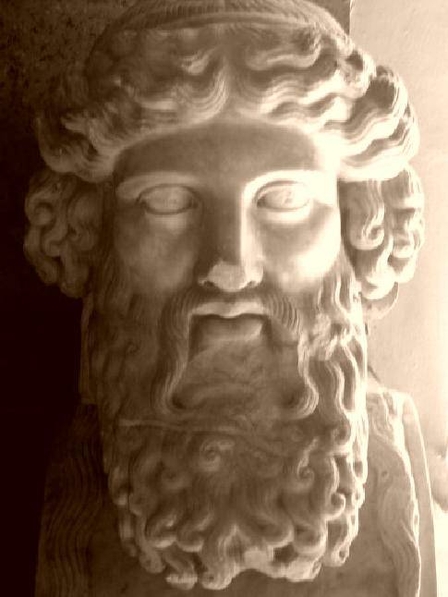
Thanks for nothing Plato.
 Printed off the Blackless article on Intersex to send to a friend who was unfamiliar with the term and what it means, and decided to quickly read it before sending it off. [Blackless, Melanie, Anthony Charuvastra, Amanda Derryck, Anne Fausto-Sterling, Karl Lauzanne and Ellen Lee (2000) ‘How Sexually Dimorphic Are We? Review and Synthesis’. American Journal of Human Biology 12:151-166.]
Personally I’m much more into Qual than Quant. But I like this article as an overview of Intersex differences in general, and even more for its critique of sexual dimorphism – which I think can be applied just as helpfully to gender as to sex.
The idea that dimorphism is a Platonic ideal struck me for the first time. Plato’s theory of Forms involves the idea that non-material, abstract, but substantial Forms or Ideas, and not the material world of changes known to us through the senses, possess the highest and most fundamental kind of reality. I guess I’ve never really come to grips with how this concept has underpinned Western thinking about everything, from religion to ethics to science to medicine etc ad infinitum. It really does pathologise change, mutability, variation – in other words, the messiness of real life!
I suspect it has been such an attractive idea because of its seductive simplicity – as H L Mencken said, “To every complex question there’s a simple answer – and it’s wrong”. It offers the enticing prospect of being able to Know, and thus to Predict, and finally Control, every aspect of existence. It is fundamentally both deistic (of the god-is-by-definition-the-only-perfect-entity persuasion) and mechanistic – a god who is by definition perfect must have designed a universe that is likewise perfect. Its manifest ‘imperfections’ are seen as corruptions, contaminations, of that original perfection. Newton thought the deity had to continually intervene to keep the system ticking over nicely; some modern humans think that is our job. But the underlying assumption is the same – that Reality is fundamentally a perfectly balanced System made up of perfectly functioning Units, and that anything that is not functioning in this way needs to be ‘fixed’. If we truly believed in Evolution we could never hold these beliefs! Mind you, one of the sad facts of Evolution is that the ‘System’ is continually getting out of balance with consequent catastrophic events (think ice ages etc) accompanied by species extinctions (think dinosaurs etc) and very long periods when Earth has not been a particularly pleasant or hospitable place for most living organisms. Sad – but true. If I’m to be consistent here, I would be forced to admit that the evolution of consciousness accompanied by sophisticated intellectual capacity (think humans) has been a particularly unfortunate development that looks set to trigger one or more of the above-mentioned catastrophic events accompanied by species extinctions likely (and, in my more pessimistic moments I would say, hopefully) including our own.
But I digress. Back to the Ideal Female and Male, as opposed to the ‘typical’. (I find myself often saying LGBTI people are ‘normal’ but not ‘typical’, much as I personally detest the idea of being ‘normal’ in any way!). In their discussion, the authors suggest that:
“Our culture acknowledges the wide variety of body shapes and sizes characteristic of males and females. Most sexual dimorphisms involve quantitative traits, such as height, build, and voice timbre, for which considerable overlap exists between males and females. Many cultures use dress code, hair style, and cultural conventions, eg the view that in couples the male should be taller than the female, to accentuate awareness of such difference” (pp. 162-163; emphasis added).
It seems to me that as the actual differences between females and males are diminishing (think ability to do math, participate in the labour market, take the primary parenting role, etc) ‘our culture’ is policing sex and gender dimorphism as enthusiastically as ever – try buying anything for girls that isn’t pink; witness the hysterical condemnation of women who don’t remove hair from upper lip or ‘pits, or men with ‘moobs’; behold the absurd diatribes against equal marriage in countries like Australia and the US. That bloody Plato has a lot to answer for!
 Aurora Arboralis